
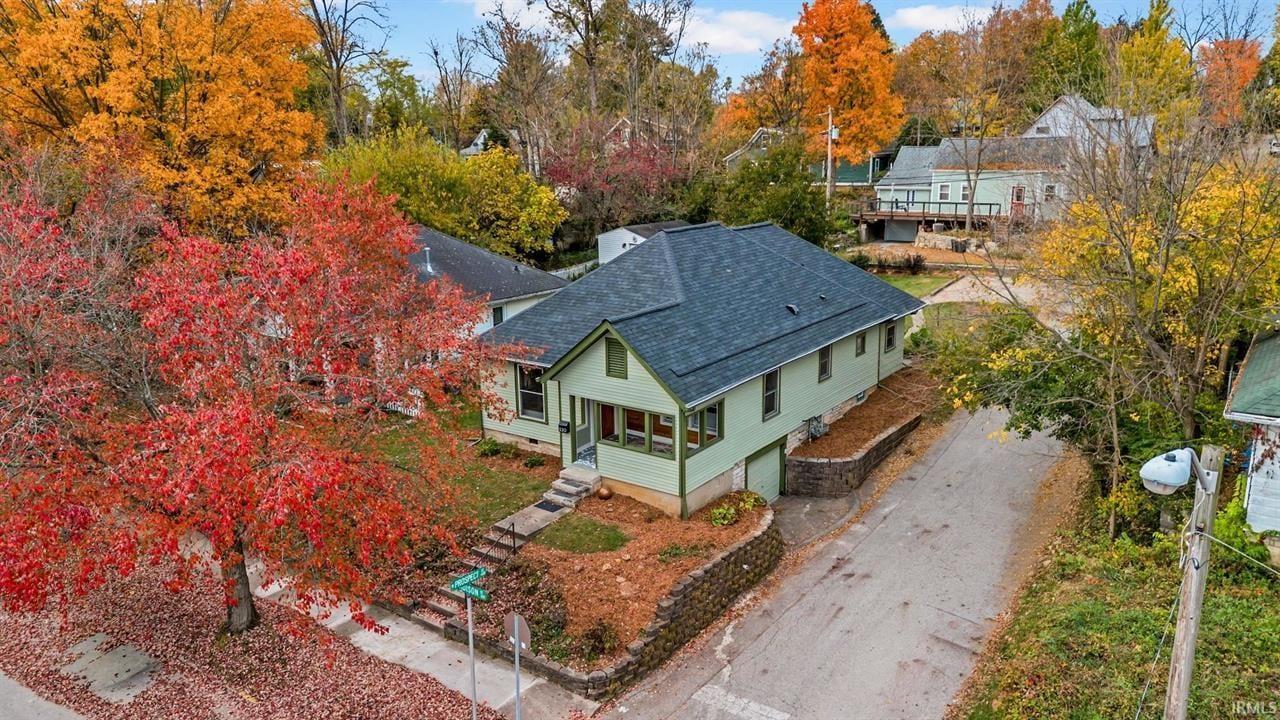
Bloomington's first local historic district, on the National Register since 1991. Queen Anne, Tudor Revival, and Craftsman homes on a rounded hill just west of the square.
Prospect Hill is Bloomington's first local historic district and has been on the National Register of Historic Places since March 1991. Platted in 1893 on a rounded hill at what was then the city's southwestern edge, it developed from roughly the 1840s to the 1930s — Queen Anne, Colonial Revival, Tudor Revival, and Craftsman homes just west of the courthouse square.
Because the district is historic, exterior changes can involve additional review, and homes vary widely in how much updating they've had. That cuts both ways: more diligence before you buy, and more protected character than almost anywhere at this price point once you do.
More attainable — general positioning, not a quote. Every street prices differently — send us an address and we'll run the real comps.
Is Prospect Hill your fit?
Our honest read, not a scorecard — your priorities decide.
You'll like it here if…
- ✓You want genuine 19th-century character at a friendlier in-town price
- ✓A tight-knit, front-porch neighborhood culture appeals to you
- ✓You're comfortable with older-home quirks in exchange for charm
Look elsewhere if…
- →You want turnkey-modern with zero exterior-review friction
- →Square footage is your top priority — homes here run smaller
Before you buy here, we'd check
The local flavor
Restaurants, shops, and the Saturday farmers' market, all within a genuine walk.
Downtown's hands-on science museum — a neighborhood-adjacent perk for households with curious kids.
The 3.1-mile downtown trail corridor runs just east of the hill.
Independent local businesses, venues, and public places we're glad to have as neighbors — mentions are informational, not endorsements or sponsorships in either direction.
Prospect Hill: honest answers
Does the historic district limit what I can change?
Exterior alterations in a designated historic district can require additional approval; interiors are generally your call. We'll confirm what applies to a specific property before you commit.
Why is Prospect Hill more attainable than other central neighborhoods?
Homes are generally smaller and older than in Elm Heights or Bryan Park. For buyers who want central, walkable, and characterful over big, it's one of the best value plays in town.
How old is the neighborhood, really?
It's Bloomington's first local historic district — platted in 1893 and developed from about the 1840s to the 1930s, with National Register listing since 1991.
Reading for Prospect Hill buyers
More Bloomington neighborhoods
A locally designated historic district with the city's greatest concentration of architect-designed homes — limestone, brick, tile, and slate on deep, tree-lined lots a short walk from campus and Bryan Park.
Guide →Wrapped around one of the city's best-loved parks — with its pool, waterslides, and ballfields. 1920s–40s bungalows, real sidewalks, and a strong family feel close to downtown.
Guide →Close-in and steadily revitalizing — historic cottages mixed with newer infill, an easy walk or bike to downtown.
Guide →Near College Mall and the hospital corridor. Mid-century ranches on quiet, curving streets — convenient and well-established.
Guide →